TBOP joins partners to unveil media literacy resources for Nigerian children
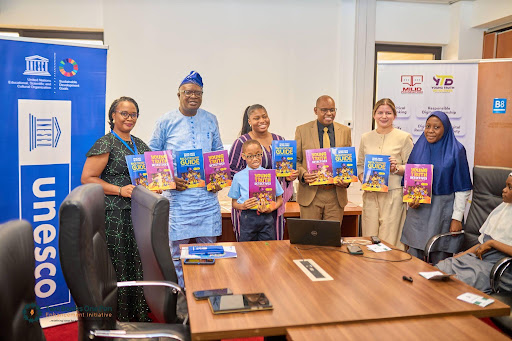
The Media and Information Literacy and Intercultural Dialogue Foundation (MILID Foundation), in partnership with Two Books One Pen Enhancement Initiative (TBOP), ZEDX Original and the United Nations Educational, Scientific and Cultural Organisation (UNESCO), on Thursday launched two media and information literacy resources designed to help Nigerian children identify misinformation and navigate digital spaces safely.
The resources, comprising the Young Truth Detectives workbook and a Facilitators’ Guide, were unveiled at the United Nations House in Abuja on 15 October 2026.
The event brought together media and information literacy stakeholders, teachers and students from Start-Start-Rite Schools and ICECE Al-Noor School to discuss the importance of helping children develop critical thinking skills and responsible information habits from an early age.
The resources target children aged six to 10 and introduce them to skills for questioning information, assessing its credibility and avoiding the spread of false or misleading content.
Speaking at the launch, Chiamaka Okafor-Onumah, co-founder and executive director of MILID Foundation, said the idea for the resources emerged from a media and information literacy intervention organised for Children’s Day in collaboration with the National Library.
Mrs Okafor-Onumah said the experience prompted the foundation to consider how the lessons could be developed into lasting resources that would reach more children.
The workbook is structured around six interactive missions designed to encourage children to ask questions whenever they encounter new information, whether online or offline. Rather than relying solely on conventional classroom exercises, the resource encourages children to learn through engaging activities.
The accompanying Facilitators’ Guide supports teachers, parents and community members in using the materials beyond formal school settings.
“It’s a material you can use anywhere really, not just for schools. In churches, in mosques, in the communities, anywhere you have people gathering and you feel a need to have children learn, these materials can be deployed there,” she said.
Her remarks highlighted the need to introduce these skills during childhood, when young people are beginning to develop the habits that will shape how they engage with information throughout their lives.
She added that the foundation hoped to work with partners to distribute the resources to more schools, including those in rural communities, and eventually translate the workbook into local languages.
Building a culture of critical thinking and digital responsibility
Isaias da Rosa, UNESCO representative to Nigeria, described the initiative as important amid the growing spread of fake news, misinformation, disinformation and hate speech.
Mr da Rosa said education was one of the most effective ways to address the problem, particularly by teaching children to verify information before sharing it.
“When we teach our young children how to be detectives of truth, how to check facts, how not to share information that are not verified, we are contributing to a better society,” Mr da Rosa said.
He noted that children now maintain both physical and online lives, interacting with people and content from different parts of the world. He urged them to avoid sharing unverified information, disclosing personal details online or engaging with strangers carelessly.
Lateef Olagunju, secretary-general of the Nigerian National Commission for UNESCO, said children needed practical tools to assess information and understand the possible consequences of sharing unverified content.
Mr Olagunju urged schools without press clubs to consider establishing them as spaces where students could develop critical thinking skills and learn to engage responsibly with information.
Sharon Omotosho, director of the International Media and Information Literacy Institute (IMILI), said addressing information-related risks required the involvement of parents, educators, organisations and other stakeholders.
Ms Omotosho stressed that parents needed to understand the digital environments their children navigate, rather than relying solely on monitoring their technology use.
She warned that children could be exposed to online scams, impersonation, harmful content and other security risks if they lacked the skills to recognise and respond to them.
TBOP supports efforts to build critical thinking skills
For TBOP, the launch aligns with its commitment to helping young Nigerians read critically, think independently and engage meaningfully with the systems around them.
The organisation recognises that literacy extends beyond the ability to read and write. Young people also need the skills to question information, assess sources and make informed decisions about what they consume and share.
Through one of its programmes such as the Karanta: Book, Press & Debate Club, TBOP creates opportunities for young people to develop critical thinking skills and engage more responsibly with information.
The launch highlighted the importance of collaboration among organisations, schools, parents and communities in expanding access to media and information literacy education.
MILID Foundation said it intended to work with partners to support the adoption and distribution of the resources, particularly in underserved and rural communities. Plans to translate the workbook into local languages were also identified as a way to make the materials accessible to more children.
Stakeholders expressed hope that the Young Truth Detectives workbook and the Facilitators’ Guide would contribute to wider efforts to improve information integrity by helping children become more careful consumers and sharers of information, both online and offline.
